
- Three Urgent Action Alerts
- Government Emails
- Sample of Jan’s Raincoast Letter (Added Final Paragraph):
- Related Videos
- Coming Soon: More SRKW Content
Three Urgent Action Alerts
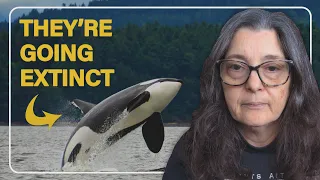
Send a letter, save a whale! Do you care about climate change, natural environments, and biodiversity? Nature and conservation groups are calling Canadians to urgent action by Nov 1, 2025, if possible. If enough people send letters, it sends a strong message that Canadians put protecting our natural identity of the true north strong and green over polluting and damaging industrial and commercial interests.
Listed below, there are templates, links, and target emails you can use, depending on the organization.
Our new federal government will be bringing in their first budget on Nov 4. Our letters can influence their priorities. That’s why this action alert is urgent.
I added to all my action alert letters that I want the feds to put science into urgent action. I want them to protect Southern Resident killer whales from imminent extinction per Independent Science Panel on SRKW Recovery (2025): Strengthening recovery actions for Southern Resident killer whales [doi.org/10.70766/32.7300] I want decisison makers to halt the Roberts Bank Terminal 2 future project that includes dredging/constructing a future megaport island in the whales legally designated critical habitat near Delta British Columbia .
Action Alert: Raincoast Conservation Foundation
https://www.raincoast.org/2025/10/window-survival-act-now-protect-chinook-southern-residents/
Action Alert: David Suzuki Foundation
https://davidsuzuki.org/action/tell-the-feds-nature-is-in-the-national-interest
Note there are lots of other petitions at davidsuzuki.org.
Action Alert: Nature Canada
(scroll down to the Grizzly roaring; there’s a green Add Your Name button right above that takes you to template).
https://naturecanada.ca/defend-nature/nature-on-the-hill
Government Emails
Prime Minister: Mark Carney mark.carney@parl.gc.ca
BC Premier: David Eby premier@gov.bc.ca
Minister of Fisheries & Oceans: Joanne Thompson DFO.Minister-Ministre.MPO@dfo-mpo.gc.ca
Deputy Minister Fisheries & Oceans: Annette Gibbons annette.gibbons@dfo-mpo.gd.ca
Fisheries and Oceans Canada, Southern Resident killer whale desk: DFO.SRKW-ERS.MPO@dfo-mpo.gc.ca
Minister of Canadian Identity and Culture: Steven Guilbault hon.steven.guilbeault@pch.gc.ca
Minister of Environment and Climate Change: Julie Dabrusin ministre-minister@ec.gc.ca
Secretary of State (Nature): Nathalie Provost hon.nathalie.provost@pch.gc.ca
Sample of Jan’s Raincoast Letter (Added Final Paragraph):
I used Raincoast’s template, but I added the final paragraph in my own words. I emailed it to the BC Premier, Minister and Deputy Minister of Fisheries & Oceans, and the SRKW desk at Fisheries & Oceans Canada:
Dear Government Decision Makers,
Southern Resident killer whales are struggling to survive, with only 74 individuals remaining. Their primary prey, Chinook salmon, has declined in size, year round availability and abundance, over recent decades. This is particularly true for the large, fat-rich fish that return to the Fraser River in the spring and summer. These salmon populations are the backbone of the killer whales’ diet at this time of year, yet most are threatened or endangered.
So far, government actions to rebuild these Chinook runs haven’t worked. Meanwhile, recreational salmon fisheries continue in the areas and seasons that are most important for whales and returning salmon. These fisheries add more noise, more boats, and more competition for the few remaining fish — exactly when whales most need quiet waters and food.
I am writing to urge Fisheries and Oceans Canada (DFO) to create a “whale-safe window” — a seasonal pause on all salmon fishing from March 1 to August 15 in critical whale habitat (see map). This simple measure would give endangered Chinook a chance to reach their spawning rivers and provide whales with the food they need to recover.
This call echoes the recommendations of the Independent Science Panel on Southern Resident Killer Whale Recovery, which stressed the importance of access to Chinook during this period. By creating a whale-safe window, DFO can take a decisive, science-based step toward saving both the whales and the salmon they depend on.
Creating a whale-safe window also opens the door for sustainable freshwater (terminal) fisheries. Once salmon populations recover, First Nations, commercial fishers and anglers could have renewed access to Chinook from within rivers. Freshwater fisheries have other benefits too: In these terminal areas, harvest can target abundant salmon runs and avoid the over-fishing of weak or endangered populations that occurs in mixed-stock marine fisheries. Freshwater fisheries also reduce bycatch mortality on both endangered and juvenile Chinook from catch-and-release practices, and they would promote the recovery of older, larger Chinook by allowing immature fish to feed and grow in local waters, in and around the Salish Sea.
I urge you to protect all endangered species and critical habitats under the Species at Risk Act and Environmental Impact Assessment Act including marine and terrestrial species. This includes taking the bold and urgent science-based action needed to save the endangered Southern Resident killer whales and their legally designated critical habitat in BC’s Salish Sea near Delta, BC. Emergency action is needed to stop the Roberts Bank Terminal 2 project that will devastate the salmon and whale ecosystem with a new artificial island shipping terminal offshore in the Salish Sea, and significantly increase Southern Resident killer whale extinction risk. Any pending or future projects should not be authorized if they threaten species recovery. Independent Science Panel on SRKW Recovery (2025). Strengthening recovery actions for Southern Resident killer whales. doi.org/10.70766/32.7300
Sincerely,{My name here}
Related Videos
As described by Knute Berger, we should all have a sense of collective guilt over what we have done to threaten the SRKWs. I can live with myself by trying my best to raise awareness to help save the whales. Together it is possible. It’s not too late. Yet.
As Dr Jane Goodall says in her final message on hope for planet Earth, “Let’s fight to the very end.
Coming Soon: More SRKW Content
I’m working on more SRKW content talking about their environmental pollution threats and recovery action plan science. Stay tuned.