
I was pleased to write an article and help answer reader questions for the American Tinnitus Association Winter 2020 issue of Tinnitus Today.
This is an excellent issue full of research, treatment, and coping news and information. My Tinnitus Q & A is on page 30 and Building Your Own Hearing Protection Toolkit is on page 46.
People are most likely to use hearing protection if they have it handy when needed. Earplugs or earmuffs should be used the first time and every time there is loud music, sound, or noise exposure.
There are many hearing protection options to consider including high noise reduction, high fidelity, and specialty. Most people need more than 1 style or type for different listening situations or activities, just like people have a variety of options in First Aid Kits.

General Age Guidelines
| Age | Hearing Protection Style Guideline |
| Newborn to 3 months | Avoid noise exposure. If unavoidable, get medical clearance to safely use hearing protection from doctor, ENT, or audiologist. Be very careful with baby’s fragile head.Consider baby size earmuffs with cups that seal comfortably around ears. |
| 3 months-3 years | If noise is unavoidable, get medical clearance to safely use hearing protection from doctor, ENT, or audiologist. Be very careful with baby or toddler’s fragile head. Consider baby or toddler size earmuffs with cups that seal comfortably around ears. |
| 3-12 years | Get medical clearance to safely use hearing protection from doctor, ENT, or audiologist. Consider well-fitting earmuffs with cups that seal comfortably around ears, and specialty features if needed, e.g. hunting. Older children or tweens with a larger head or ears might be able to use earplugs if there is no history of chronic ear infections and the style fits properly, e.g. custom-molded earplugs fit by hearing healthcare professional, pre-molded high fidelity or musician’s type earplugs. |
| 13+ years | Consider well-fitting earmuffs with cups that seal comfortably around ears, and specialty features as needed for listening and communication needs. Consider well-fitting earplugs that comfortably seal off the ear canals, and specialty features as needed for listening and communication needs. |
Jan’s Hearing Protection Toolbox
My family has household earmuffs and individual earplugs for each adult in our family, a set in the car, and keychain earplugs just in case there’s unexpected noise while out and about.
High Noise Reduction
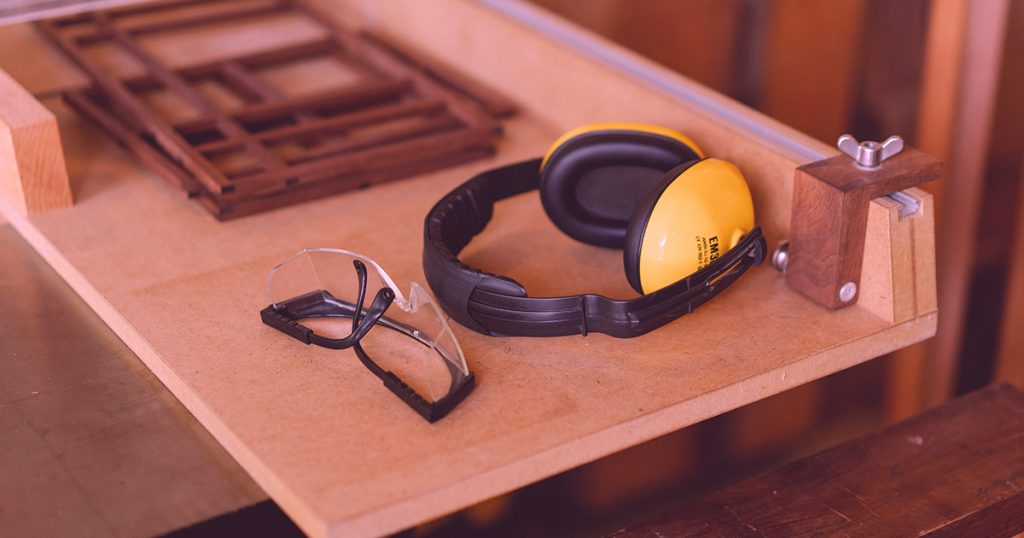
I use foam earplugs and regular earmuffs when using power tools or equipment at home. I used to use foam earplugs for very loud concerts or events. But they hurt my ears after about an hour, so I’ve switched to high noise reduction pre-molded flanged earplugs. My favourite live act is Avatar the metal band, and I see them every time they tour to Vancouver, B.C., Canada.
High Fidelity
I also use pre-molded “musician’s” type earplugs for loud concerts or events including watching movies at the cinema. I used these for a Zelda Symphony and Radical Face non-percussion concert. If the music or sound is loud enough to hurt, I switch out to foam.
I also have a pair of custom-molded earplugs that I used for workplace noise in the past, e.g. visiting constructions sites or sawmills. They had an option to flip from high fidelity (filter open) to high noise reduction (filter closed). This allowed me to protect my hearing but also have conversations in noisy environments.
Specialty
I don’t have any specialty hearing protection, because I don’t do activities or hobbies where I need any, e.g. hunting, riding motorcycle, ATVing.
What do you need in your Hearing Protection Toolkit to protect your hearing for life?
Built-In
I have hyperacusis, so I use my finger plugs a lot. My family gives me a “heads-up” before they make a short loud sound, e.g. use blender, hammer a nail in to hang a picture, anything metal-on-metal. I also use my finger plugs for noisy scenes in shows or movies at home, e.g. unexpected gunfire or simulated tinnitus.